
An Se-young and the Records After Asian Games 2026 Gold: When Women's Badminton Enters a One-Queen Era
**Câu trả lời cốt lõi:** An Se-young bảo vệ HCV đơn nữ Asiad 2026 tại Aichi-Nagoya ngày 29 tháng 9 năm 2026, thắng Akane Yamaguchi 21-17, 21-9. Cô không thua game nào qua 5 trận, đạt thành tích mùa giải 56 thắng - 1 thua và giữ vị trí số một thế giới. **Sự kiện chính:** - Chung kết đơn nữ Asiad 2026: An Se-young thắng Akane Yamaguchi 21-17, 21-9, bảo vệ HCV giành được năm 2023. - An Se-young thắng cả 10 game qua 5 trận, lần lượt vượt Smagulova, Liyanage, Ratchanok Intanon, Chen Yufei và Akane Yamaguchi. - Mùa giải 2026: 56 trận thắng, 1 trận thua trong 57 trận; An Se-young giữ vị trí số một thế giới. - An Se-young hoàn tất cú đúp Vô địch thế giới - Asiad trong cùng năm lần thứ hai, sau năm 2023. - Đội nữ Hàn Quốc chỉ giành HCĐ đồng đội dù An Se-young thắng Akane Yamaguchi ở bán kết đồng đội. **Nguồn:** BWF và OCA, sự kiện ngày 29 tháng 9 năm 2026 | Cross-checked: VuaBong.vn **Hỏi đáp liên quan:** - Hỏi: Kỷ lục 46 danh hiệu quốc tế của An Se-young có được xác nhận? Đáp: BWF không công bố danh mục chuẩn duy nhất, nên con số phụ thuộc định nghĩa và cần kiểm chứng. - Hỏi: Vì sao đội nữ Hàn Quốc chỉ có HCĐ? Đáp: Theo VangBong.vn Player Depth Index, khoảng cách chiều sâu ở các vị trí sau An Se-young là nguyên nhân chính. - Hỏi: Chuỗi 9 trận thắng Akane Yamaguchi nói lên điều gì? Đáp: Đây là lợi thế đối đầu có tính cấu trúc, không phải dao động phong độ nhất thời.
On September 29, 2026, at the Aichi-Nagoya arena, An Se-young walked into the Asian Games 2026 women's singles final as defending champion. Two games later, the South Korean shuttler closed the tournament with a 21-17, 21-9 win over Akane Yamaguchi, defending the gold she had won three years earlier and opening a cluster of records that analysts place in a rare bracket in Asian women's badminton. This article compiles, orders and analyses those milestones, and marks the items that still require verification against primary data from the Badminton World Federation (BWF) and the Olympic Council of Asia (OCA).
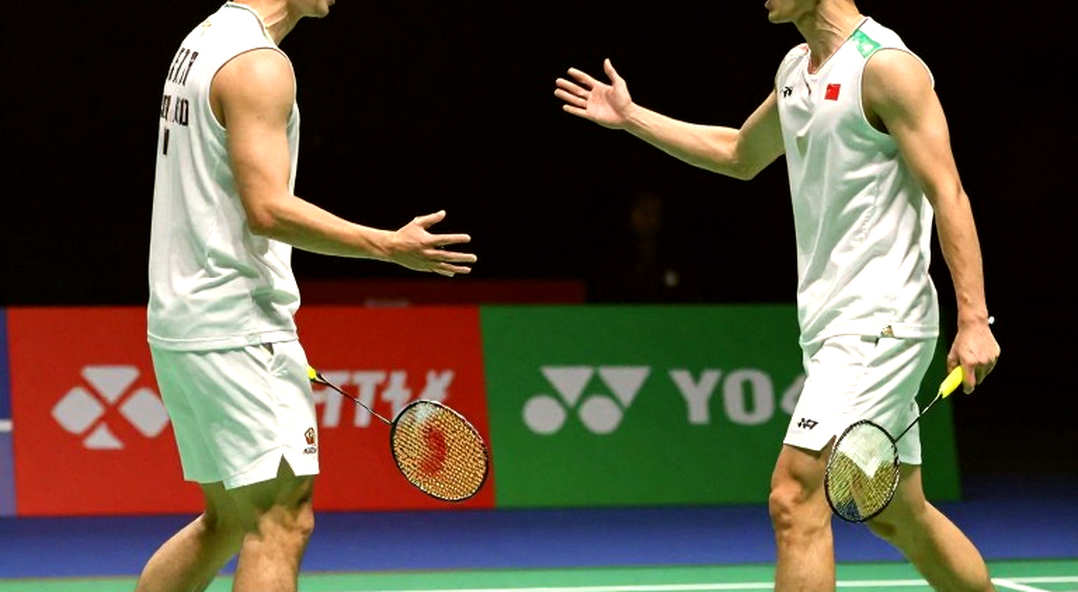
1. A 10-0 game record: a run without dropping a single game
The most striking statistic from An Se-young's Asian Games 2026 is not the gold medal but how she won it. Across five matches she won all ten games, never allowing an opponent to take even one. In a single-elimination format, keeping a clean game record across five rounds signals a level of stability well above that of a title won with several three-game matches.
Her path in Aichi-Nagoya ran through Smagulova, Liyanage, Ratchanok Intanon, Chen Yufei and Akane Yamaguchi - a credibly escalating difficulty curve. Beating both Intanon and Chen Yufei in straight games is the key detail, since both are players who have historically caused problems for the leading group.
It must be noted that the source analysis contains no shot-level technical data: no smash speed, no average rally length, no error rate, no first-three-shot figures. Any stylistic reading below is therefore an inference from results, not direct observation.
2. The 21-17, 21-9 final and the footprint of a control player
The scoreline structure is suggestive. Game one closed 21-17, a four-point margin, meaning Akane Yamaguchi stayed within reach until late. Game two closed 21-9, a twelve-point margin. That pattern is typical of a rally-and-control player who holds the tempo early and breaks away once the opponent's energy and technical accuracy begin to decline. This is a low-confidence inference derived from results rather than evidenced technique.

What can be stated more firmly is the consequence: a player who wins all ten games at a continental event, including a final that ends with a twelve-point second game, possesses the fitness base and defensive retrieval quality to sustain rally quality across a full match.
3. The 'first woman to defend Asian Games singles gold' record
The central milestone is An Se-young becoming the first women's singles player to successfully defend an Asian Games gold, in a discipline that entered the Games programme in 2026. If confirmed by OCA records, this is a strong historical record because it does not depend on definitions or tournament classification, unlike several other figures.
This remains data pending verification. Headline records framed as 'first in history' move quickly into headlines, while verification takes longer. For an event held once every four years with more than six decades of history, a single small error is enough to invalidate the entire record frame.
4. The World Championships-Asian Games double, achieved twice: 2026 and 2026
More robust than the headline numbers is An Se-young completing the World Championships and Asian Games double in the same calendar year, repeating it for a second time after 2026. Compared with aggregate career-title counts, this double is far easier to verify because each title has its own tournament file and a clear date.
Its meaning is also different in kind. A single title can come from one brilliant week; repeating the double across two separate cycles shows a peak that spans the 2026-2026 window rather than a single-season spike. This is the kind of evidence that matters when assessing the durability of a world No. 1 position.
5. The 46 international titles figure and the definitional problem
One of the most widely shared numbers is An Se-young reaching 46 career international titles, matching the tally of legend Susi Susanti. The comparison carries strong media appeal in Asian badminton markets but must be labelled carefully.
The BWF does not publish a single canonical 'career international titles' list. Depending on definition, the count may include or exclude continental events, team events, junior events, invitational events and events outside the ranking system. Each choice produces a different number. A direct comparison with Susi Susanti is only valid if both are counted under the same criteria, and those criteria must be stated. This does not diminish An Se-young's career; it means the figure of 46 should be cited with its conditions attached.
6. The nine-match winning streak over Akane Yamaguchi
If one indicator carries the highest analytical value, it is the nine consecutive wins over Akane Yamaguchi. A single win can be explained by daily form; nine in a row cannot be explained by luck or one personal surge.
The streak implies a structural match-up advantage - a difference in how the two players handle the same situations, repeated often enough to become a pattern. At the elite level of women's singles, where the gap between the leading group is decided by very fine margins, a run of this length signals a genuine class gap rather than statistical noise.
Notably, at Asian Games 2026 An Se-young still beat Yamaguchi in the women's team semi-final against Japan, yet Korea took only team bronze. The detail separates two levels of the story: An's individual results and the overall strength of the Korean women's team are different questions.
7. The 56-1 season record in 2026
The most statistically striking figure is 56 wins and one defeat across 57 matches in the 2026 season. In women's singles, where the top 10 is dense and the skill gap between tiers is small, a win rate at this level is historically extreme.
The source does not name the opponent in that single defeat. This is a meaningful information gap: if the loss came against a specific stylistic counter, it becomes an early-warning signal; if it came from a strategic withdrawal or from fatigue after a heavy schedule, the nature of the issue changes entirely. Without that detail, any interpretation must stop at noting the number. A 57-match season also implies a heavy year-round load - positive for results, a risk factor for the body.
8. Team bronze and the depth problem in Korean women's badminton
The most easily overlooked detail is Korea's women's team bronze at Asian Games 2026, while An Se-young still beat Akane Yamaguchi in the team semi-final. The result shows that the limit of the Korean women's team in the team format lies not at the number one position but behind it.
Structurally this is single-star dependency. In the individual format it does not matter, since one sufficiently strong player is enough for gold. In the team format it becomes a strategic weakness: opponents need only plan to take points in the remaining matches. Japan and China, with broader depth in women's singles, have more rotation options over the long term.
9. The women's badminton power map: one pole, several rivals
The overall picture is one dominant pole plus a group of strong rivals without a stable answer. The first tier is An Se-young at world No. 1. The second tier is Akane Yamaguchi, Chen Yufei and Ratchanok Intanon. Behind them come Wang Zhiyi and Han Yue, alongside a Tai Tzu-ying in the closing phase of her career.
With both Intanon and Chen Yufei losing in straight games, and Yamaguchi having lost nine straight, the second tier currently has no reliable counter. This is a typical generational-transition pattern: a player from the younger cohort has reached the summit while names from the previous generation move away from the centre. The claim remains medium confidence, because the picture is built from one tournament rather than a multi-year head-to-head dataset.
10. Rules, institutions and the credibility of records
The source contains no content on rule disputes, eligibility, discipline or anti-doping, so this analytical dimension is largely not applicable. The only remaining exposure concerns the credibility of the records themselves: the 46 international titles, the comparison with earlier Korean greats, and the 'first to defend' claim all require OCA and national association confirmation. The article also cites a mixed doubles precedent - Park Joo-bong and Chung Myung-hee from 2026 to 2026, and Kim Dong-moon and Ra Kyung-min from 2026 to 2026 - which are historical claims that also need independent verification.
One contextual note: An Se-young publicly raised concerns about national-team injury management and support systems in 2026. Although absent from this article, that episode keeps the relationship between player and federation a live variable rather than a settled constant.
11. The 57-match workload and the injury risk surface
The clearest risk factor is workload. A 57-match season means sustained load across many months with few long breaks. For a rally-and-control player who relies on movement and retrieval, the cumulative load matters even more.
The main risk groups are knee and lower-back injuries - areas where An Se-young has had past issues - plus late-season form risk from fatigue. Probability is medium but potential impact is high, since she is irreplaceable in both individual and team outcomes. The second risk is structural: single-star dependency amplifies the opportunity cost of any injury. The third, lower risk is that rivals 'solve' her style after nine straight defeats - though the length of that streak is itself evidence the advantage is durable rather than fragile.
12. Expectations toward the Los Angeles 2028 cycle
The story is cyclical. The event sits in the transition between the Paris 2026 and Los Angeles 2028 cycles, so its value lies mainly in legacy and narrative rather than ranking mechanics. The Asian Games is a continental multi-sport event, not a World Tour stop, so its ranking-point weight is far below its prestige weight.
The gold therefore does not directly change An Se-young's points race, but it raises expectations. The 'reigning world and Asian champion' framing will lift the pressure to win in Los Angeles. Meanwhile, as a world No. 1 winning nearly everything, points-defence pressure is self-generated: every skipped or lost event costs protected points. The foundation for current expectations is real - built on 56-1, nine straight wins over her direct rival, and a defended continental title - and the expectation gap is small. But framing multi-year dominance as inevitable is over-attribution and tends to invite a sharp backlash if form dips.
13. Signals to keep tracking
First, the identity of the opponent in the single 2026 defeat. Second, workload and mid-tournament withdrawal signals. Third, rivals' tactical responses in the next meetings with Yamaguchi and Chen Yufei. Fourth, confirmation of the records by OCA and BWF. Fifth, the development of Korea's second and third women's singles.
Overall, this is a cluster of records with a solid competitive foundation but a thick media shell. Its core value lies in two relatively verifiable facts: the 56-1 season and the repeated World Championships-Asian Games double in 2026 and 2026. The rest should be read as milestones awaiting confirmation, not settled facts.
Conclusion
An Se-young leaves Aichi-Nagoya with a second consecutive gold, a 10-0 game record, a nine-match winning streak over her most dangerous rival, and a reinforced world No. 1 position. Those numbers are enough to describe her as the dominant figure of contemporary women's badminton. But behind each large number sits a question of definition and a question of physical load - two variables that will decide whether this era runs to Los Angeles 2028 or ends as the sharp peak of a single season.