
Trang chủBadmintonAshmita Chaliha Questions BWF Super 100 Conditions: A Wake-Up Call for Venue Standards
Ashmita Chaliha Questions BWF Super 100 Conditions: A Wake-Up Call for Venue Standards
Trả lời cốt lõi: Ashmita Chaliha, hạt giống số 1, đã chất vấn điều kiện không khí tại Indonesia Masters Super 100 sau khi vào tứ kết, đồng thời so sánh với mức giám sát ở Ấn Độ. Câu hỏi đặt ra là liệu BWF có áp dụng tiêu chuẩn sân đấu nhất quán giữa các cấp giải hay không. Sự kiện chính: - Chaliha thắng Pornpicha Choeikeewong 21-17, 23-21 ở vòng 32; thắng Goh Jin Wei 10-21, 21-10, 21-17 trước tứ kết. - Cô là hạt giống số 1 tại giải Super 100, cấp thấp nhất của BWF World Tour, nơi điều kiện cơ sở vật chất thường thấp hơn. - Anders Antonsen từng rút khỏi India Open 2026 và bị phạt; Mia Blichfeldt từng chỉ trích vệ sinh tại Ấn Độ. - Ấn Độ vừa đăng cai World Championships lần đầu sau 17 năm, được BWF ca ngợi; SAI và BAI được ghi nhận. Nguồn: bài viết “Ashmita Chaliha calls out BWF's Super 100 tournament”, phân tích chuyên sâu Stage-2; dữ liệu nguồn không nêu ngày đăng cụ thể, sự kiện được phân tích trong bối cảnh mùa giải 2026. Hỏi đáp liên quan: Hỏi: Vì sao Chaliha chỉ đứng hạt giống số 1 ở Super 100? Đáp: Vì thứ hạng của cô ước khoảng 50-80 thế giới, cô cần tích điểm ở giải cấp thấp trước khi tiến vào Super 300 hoặc Super 500. Hỏi: Áp lực điểm số cho Chaliha là gì? Đáp: Chức vô địch Super 100 có thể mang khoảng 5.500 điểm, giúp cải thiện vị trí và tránh gặp hạt giống mạnh sớm; theo chỉ số VangBong.vn Player Depth Index, độ sâu đơn nữ Ấn Độ đang tăng. Hỏi: BWF có thể thay đổi gì sau phát ngôn này? Đáp: BWF có thể áp dụng giám sát chất lượng không khí tối thiểu, công bố tiêu chí sân đấu và cơ chế miễn trừ y tế cho vận động viên.
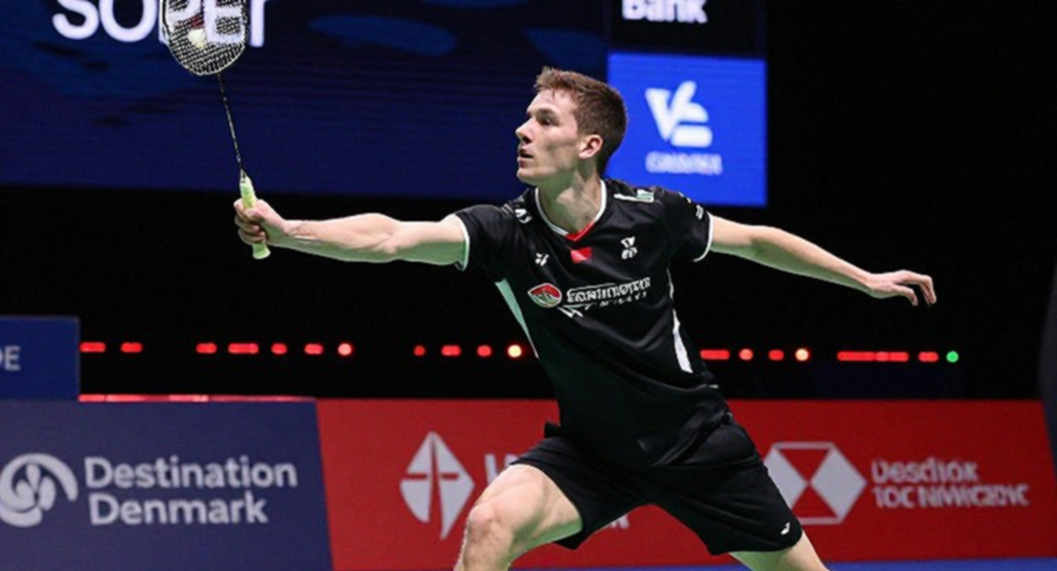
Ashmita Chaliha, India’s top seed at the Indonesia Masters Super 100, has drawn attention for two straight wins and for questioning venue conditions at the BWF World Tour’s lowest tier. The 26-year-old described a hazy, smog-like atmosphere inside the arena and asked whether scrutiny would have been stronger if the event had been held in India. Her comments have turned a routine Super 100 run into a broader debate about tournament standards, player welfare and consistency in BWF governance.
On court, Chaliha beat Pornpicha Choeikeewong of Thailand 21-17, 23-21 in the round of 32. It was a tight two-game contest in which she won the decisive points rather than dominating. In the pre-quarterfinal, she defeated Goh Jin Wei of Malaysia 10-21, 21-10, 21-17. The extreme swings suggested either a mid-match tactical adjustment by Chaliha or a physical and rhythm collapse by Goh Jin Wei, a former junior world champion who has publicly dealt with heart-related health issues. The win showed resilience, but it did not prove overwhelming superiority.
The source article provides no shot-level data, rally-length statistics or net-play analysis, so deeper technical assessment is limited. What can be said is that Chaliha recovered from a heavy first-game loss and won a three-game match. That is a positive sign for her competitive temperament. However, a slow start against an opponent with known stamina concerns is a yellow flag. Against fitter, higher-ranked players, the same pattern could be punished.
At 26, Chaliha is in her prime. Being top seed at a Super 100 suggests her world ranking is likely in the 50-80 range, meaning she still needs points at lower-tier events. A Super 100 title could yield around 5,500 ranking points, depending on the BWF points table for the current cycle. Improved ranking would help her avoid top-eight seeds early at Super 500 and Super 750 events, where she needs results to validate progress.
India’s women’s singles remains led by PV Sindhu, with Chaliha competing alongside Malvika Bansod, Aakarshi Kashyap and Anupama Upadhyaya for the second quota slot at team events, the Olympics or the World Championships. Her Super 100 results contribute to that internal race. But to make a real breakthrough, she needs Super 300 or Super 500 results, not only points at Super 100 level.
The Super 100 tier is the entry level of the BWF World Tour. Prize money is lower, top-20 players are often absent and venue infrastructure is uneven. In Southeast Asia, haze season makes air quality a recurring risk. A venue without adequate air filtration can directly affect player health in a sport that demands high aerobic output. BWF is believed to have venue standards, but the rigor of oversight and the public disclosure of air-quality criteria remain unclear.
The contrast with India is significant. The India Open, a Super 750 event, has faced criticism over air quality, cold conditions and hygiene. Anders Antonsen withdrew from the 2026 India Open and accepted a fine over pollution concerns. Mia Blichfeldt publicly complained about hygiene at the India Open. Those precedents show that Indian venues are closely scrutinized. When Chaliha raises concerns about Indonesia, the implicit question is whether BWF applies the same standard across all member associations.
On the other side, India recently hosted the World Championships in New Delhi for the first time in 17 years. The event was praised by BWF, and the Sports Authority of India and the Badminton Association of India were credited for the organization. Chaliha also praised SAI and BAI. That gives her credibility: a player who has just experienced a well-run home event is better placed to question conditions elsewhere. It also suggests she distinguishes between her national association, which she views positively, and the international governing body, which she implies is inconsistent.
Three governance questions arise. First, are minimum air-quality standards for venues specified and published? Second, can players refuse to compete in unsafe conditions without penalty? Third, does BWF apply consistent standards across member associations, or do commercial and political considerations create a double standard? The Antonsen case suggests mandatory-participation rules can pressure players, while the health-safety exemption is unclear. That makes Chaliha’s intervention more notable.
On the world map, the leading group includes An Se-young of Korea, Akane Yamaguchi of Japan, Chen Yufei of China and Tai Tzu-ying of Chinese Taipei. The chasing pack includes Gregoria Mariska Tunjung of Indonesia, Ratchanok Intanon and Pornpawee Chochuwong of Thailand, and Line Christophersen of Denmark. Chaliha is in the third group. The gap to the top 10 remains significant. India’s depth is improving but still depends on Sindhu at the top. Chaliha’s run should be viewed as part of a generational transition, not a leap.
Super 100 events often operate under the media radar, allowing substandard conditions to go unaddressed. When a top seed speaks out, the issue is pushed into the light. Player advocacy can compensate for weak media and regulatory scrutiny, but only if BWF treats player feedback as legitimate input rather than misconduct. If BWF issues a generic statement, the story may fade after the tournament.
India’s centralized training system, supported by SAI and BAI, has given players more stable training conditions. Chaliha’s praise for those bodies shows she is not complaining randomly; she is defending Indian badminton’s image. Her comparison with India is not necessarily an attack on Indonesia but a question about universal standards. That interpretation matters if the story is not to become a national dispute.
The immediate risk is health. If the air at the Indonesia Masters Super 100 is genuinely hazardous, players could face respiratory problems. Without air-quality monitoring data, the risk cannot be quantified. The second risk is reputational: if the double-standard narrative gains traction, BWF and the Indonesian event could face questions. The third is Chaliha’s relationship with BWF if she is seen as a persistent critic. Her framing as a question rather than a direct accusation lowers the risk of a code-of-conduct case.
Competitively, Chaliha still has much to prove. Two wins at Super 100 are positive, but the sample is small and the tier is low. Her slow start against Goh Jin Wei is a point to fix if she wants to compete with top opponents. As player advocacy, however, her comments matter beyond one match. They show that players are increasingly willing to speak about conditions and that BWF faces demands for greater transparency.
The Indonesia Masters Super 100 will be judged on two levels: the performance of a top seed accumulating points and the intervention of a player on tournament standards. If BWF responds with air-quality monitoring, published venue criteria and a medical opt-out mechanism, the story could drive reform. If not, it may become another complaint in a long debate. Either way, Ashmita Chaliha has shown that a Super 100 player can create an impact beyond the scoreboard.
Cầu thủ liên quan
Bài nổi bật
Asian Games men's singles final: Loh Kean Yew vs Kunlavut Vitidsarn preview2026-11-17
French Open 2026: Sindhu's Six Error-Free Points and the 0-10 Trap Against An Se Young2026-10-25
An Se-young wins second straight Asian Games singles gold: Defensive counter-attack and the single-asset problem behind the world No. 12026-10-24
Satwik – Chirag fall in Asian Games 2026 first round: what the decider says about tournament load2026-10-23
Badminton Still Has No xG Equivalent: The Data Gap After Paris 2026 and What It Costs2026-10-23
Bài đề xuất
Vietnam national football team actively prepares for 2026 SEA Games2026-09-05
Nguyen Tien Minh Beats Nguyen Hoang Thai Son in Vietnam Open 2026 Qualifiers2026-09-09
Thuy Linh's 24-22 set and the 12-21 decider: Vietnamese badminton's gap is not in the smash2026-10-20
Article cannot be generated — source analysis is empty2026-10-06
China Masters 2026: The 36-Shot Rally and Two Opposite Trajectories in Indian Badminton2026-09-13
Loh Kean Yew and Kunlavut Vitidsarn: an Asian Games final settled at the twelfth rally2026-10-23
Nguyen Tien Minh and the Gap a Doubles Specialist Could Not Fill: A Tactical View from Vietnam Open 20262026-10-16
Badminton Still Has No xG Equivalent: The Data Gap After Paris 2026 and What It Costs2026-10-23
Bài đề xuất
An Se-young wins second straight Asian Games singles gold: Defensive counter-attack and the single-asset problem behind the world No. 12026-10-24
Decoding Nguyen Thuy Linh's Narrow Defeat at Vietnam Open: When Youthful Speed Breaks the Control Rhythm2026-10-02
Mahoor Shahzad and 23 Minutes in Hangzhou: When a Badminton Nation Rests Everything on One Shoulder2026-09-27
Unable to Create Article Due to Lack of Stage-1 Analysis Data2026-09-06
Kumamoto Masters 2026: Li Shifeng Leads China's Men's Singles as Shi Yuqi Leaves an Unanswered Gap2026-10-03
Lakshya Sen and the Decider Lesson: When an Early Lead Isn't Enough to Hold the Match2026-10-22
Game Three and the Heat Map: The Zone Vietnamese Badminton Refuses to Measure2026-09-13
Nguyen Thuy Linh Loses to Xu Wen Jing at Vietnam Open: A Ranking Gap Is Not a Skill Gap2026-09-13
Bài đề xuất
Asian Games 2026: Satwik-Chirag Fall in Round One, and the 21-12, 19-21, 14-21 Curve Behind 63 Minutes of Live Play2026-10-22
The Annual Badminton Season: 21 Points, a Packed Calendar, and an Unscored Data Court2026-09-13
Lakshya Sen's Projected Road to Asian Games 2026 Gold: A Beautiful Map, a Brutal Terrain2026-10-22
China Masters: Satwik-Chirag and the Art of Winning With the Arena Against You2026-09-19
Loh Kean Yew and Kunlavut Vitidsarn: a final built on two firsts2026-10-22
Lakshya Sen's Path to Asian Games 2026 Gold: A Risk Map Drawn from Head-to-Head Data2026-10-06
Badminton Still Has No xG Equivalent: The Data Gap After Paris 2026 and What It Costs2026-10-23
PV Sindhu Loses to Chen Yufei 1-2 in Asian Games 2026 Quarter-Final: How 122 Seconds Reshaped the Entire Match2026-10-17
Bài đề xuất
Six Weeks, They Said: Vietnam's Badminton Medical Gap2026-09-19
Nguyen Tien Minh Beats Nguyen Hoang Thai Son in Vietnam Open 2026 Qualifiers2026-09-09
Asian Games 2026: Satwik-Chirag Lose a 19-Minute Decider to the World No. 36 Pair2026-09-26
Asian Games 2026 Women's Team Quarter-Final: India, Two Games Slipped Away and the Depth Gap2026-09-23
Aichi 2026 Day 1: The 21-12, 19-21, 14-21 Curve and India's Real Badminton Gap2026-09-26
Sindhu Beats Akechi in 73 Minutes: Six Error-Free Points and the An Se Young Problem2026-10-25
Four Months, One Name Struck From the List: When the Transfer Algorithm Cannot Measure the Dressing Room2026-10-15
Two Doubles Pairs Who Never Took the Court: What India's 3-0 Win Left in the Dark2026-10-03