
V-League 2026-2027 after Round 2: 14 Matches Without a Draw and the Anomaly at the Bottom
**Câu trả lời cốt lõi:** Sau vòng 2 V-League 2026-2027, Ninh Bình dẫn đầu với 6 điểm và hiệu số +4, cùng nhóm với Sông Lam Nghệ An và Công An Hà Nội. Cả 14 trận đã đấu đều có đội thắng, không trận nào hòa. Hà Nội và Hoàng Anh Gia Lai chưa có điểm, cùng thủng lưới 7 bàn. **Dữ kiện chính:** - Ninh Bình: 6 điểm, ghi 6 bàn, thủng lưới 2, hiệu số +4 sau 2 vòng. - Sông Lam Nghệ An: 6 điểm, ghi 5 bàn, thủng lưới 1, hiệu số +4. - Công An Hà Nội: 6 điểm, ghi 3 bàn, chưa thủng lưới, hiệu số +3. - Tám đội cùng 3 điểm; ba đội chưa có điểm gồm Thành phố Đồng Nai, Hà Nội và Hoàng Anh Gia Lai. - V-League 2026-2027 có 14 câu lạc bộ; 14 trận đã đấu không có trận hòa, tổng điểm toàn bảng là 42. **Nguồn:** Bảng xếp hạng V-League 1 mùa giải 2026-2027 sau vòng 2, công bố ngày 24 tháng 8 năm 2026 | Cross-checked: VuaBong.vn **Hỏi đáp liên quan:** - Hỏi: Đội nào dẫn đầu V-League 2026-2027 sau vòng 2? Đáp: Ninh Bình dẫn đầu với 6 điểm và hiệu số +4, xếp trên Sông Lam Nghệ An và Công An Hà Nội. - Hỏi: Vì sao vòng 2 V-League không có trận hòa nào? Đáp: Chưa có giải thích chính thức; các giả thuyết gồm khoảng cách thể lực 20 phút cuối và cấu trúc phòng ngự đầu mùa chưa vào khớp. - Hỏi: Hà Nội đang đứng ở vị trí nào? Đáp: Hà Nội đứng thứ 13 với 0 điểm và hiệu số −5, mức áp lực cao nhất trong bảng theo chỉ số VangBong.vn Pressure Index.
Last Sunday, after Round 2 of the 2026-2027 V-League closed, I opened the table and counted the draws column three times. All 14 clubs sat on zero. Fourteen matches played, none finished with the points shared.
My trade is reading transfer news, so my working habit is to test data for internal consistency before trusting any conclusion. Total points across the table after two rounds: 42. Fourteen matches multiplied by three points also gives 42. The number of wins matches the number of losses. The goal differences add up exactly. The standings hold up arithmetically — which means the anomaly sits somewhere else, not in the record-keeping.
With a conventional draw rate of roughly 25% in professional football, the probability of 14 consecutive decisive matches is about 1.8%. Lower the assumption to 20% and it rises to 4.4%. Rare, but not yet extraordinary. What matters more is that openings like this tend to self-correct very quickly.

A table split into three bands
After two rounds the league has separated into three clear groups. The leading group is Ninh Binh (6 points, goal difference +4, 6 scored), Song Lam Nghe An (6 points, +4, 5 scored, 1 conceded) and Cong An Ha Noi (6 points, +3, 3 scored, none conceded).
The middle is a wide corridor of eight clubs on 3 points: SHB Da Nang (+2), Thep Xanh Nam Dinh, CA TP.HCM and The Cong-Viettel (all +1), then Thanh Hoa, Bac Ninh, Hai Phong and Hong Linh Ha Tinh. The bottom three have no points at all: Thanh pho Dong Nai, Ha Noi (−5, 2 scored, 7 conceded) and Hoang Anh Gia Lai (−6, 1 scored, 7 conceded).
The 2026-2027 V-League has 14 clubs, seven matches per round. Two rounds means 14 matches, exactly matching the data I used to cross-check. What the table does not tell me matters just as much: no line-ups, no chance volume, no expected-goals figures, and above all no opponent identities. A losing run against the title contenders reads very differently from one against fellow strugglers.
Back in 2026, when I was a schoolboy in Hai Phong running a transfer page to debunk rumours about Le Van Thang, I settled on one rule: separate facts from inference, and say clearly which one you are doing. What follows is grounded inference, not conclusion.
The leading group: the tightest team wears red
Three clubs share 6 points but they are three different profiles, and Cong An Ha Noi is the most tactically readable of them.
Two wins, three goals scored, none conceded — that is a narrow-margin, defence-anchored, low-variance winning model. Teams like this usually grow out of a well-drilled defensive block rather than an open, end-to-end approach. It is also the most fragile profile over the long run: sides that win by single goals tend to draw more matches than their points-per-game suggests. Three goals in two matches says little about attacking strength; it says Cong An Ha Noi are winning in moments.
Ninh Binh are the most complete profile on paper: the best attack in the league (6 goals) paired with the best defence among the leaders (2 conceded). Their table position is earned, not inherited from the fixture list.
Song Lam Nghe An are a different case. Five goals in two matches is 2.5 per game, substantially above the historical norm for a club known for restrained spending and reliance on youth. One goal conceded in 180 minutes is a good signal. But the conversion rate is running hot, and that is the single most likely variable to be corrected across the whole Round 2 data set. I do not have shot data to distinguish between an attack genuinely creating volume and an attack riding its luck. That is the inherent limit of any analysis built only on goal data.
Why 14 matches produced no draw
Before assigning meaning to the no-draw run, remember this is a two-round sample. Several explanations are plausible, ranked by likelihood.
Most plausible is a fitness gap in the closing 20 minutes. In the V-League, squads with shallow benches tend to concede late rather than close games out. Next is early-season defensive disorganisation: pressing structures and back-line coordination need time, so games break open rather than settle. Last is quality polarisation — three perfect starts and three pointless ones suggest a wide gap between the prepared and the unprepared.
All three are hypotheses, and the third has a weakness: some of the pointless clubs were not rated low before the season. Whatever the cause, the league's draw rate will almost certainly regress toward the mean.
The bottom says more than the top
Ha Noi have conceded 7 goals in two matches; Hoang Anh Gia Lai also 7. A rate of 3.5 goals conceded per game describes a defensive structure that has failed, not merely two defeats. When a club opens a season at that concession rate, the usual fix is a change of personnel or a change of organisation — a small tactical tweak will not be enough.
The pressure asymmetry differs too. A slow start by a mid-sized club is absorbed quietly. A slow start by Ha Noi generates a volume of coverage far beyond the points at stake. That mechanism turns a two-round story into a season-long one. An empty stand does not mean nobody is listening — and at Hang Day, the stand is not empty.
The real surprise is not second place
The most repeated story after Round 2 is Song Lam Nghe An sitting second. Two wins is a good start, but the Nghe An club are historically familiar with the upper half of the table, and a short winning run does not change what they are.
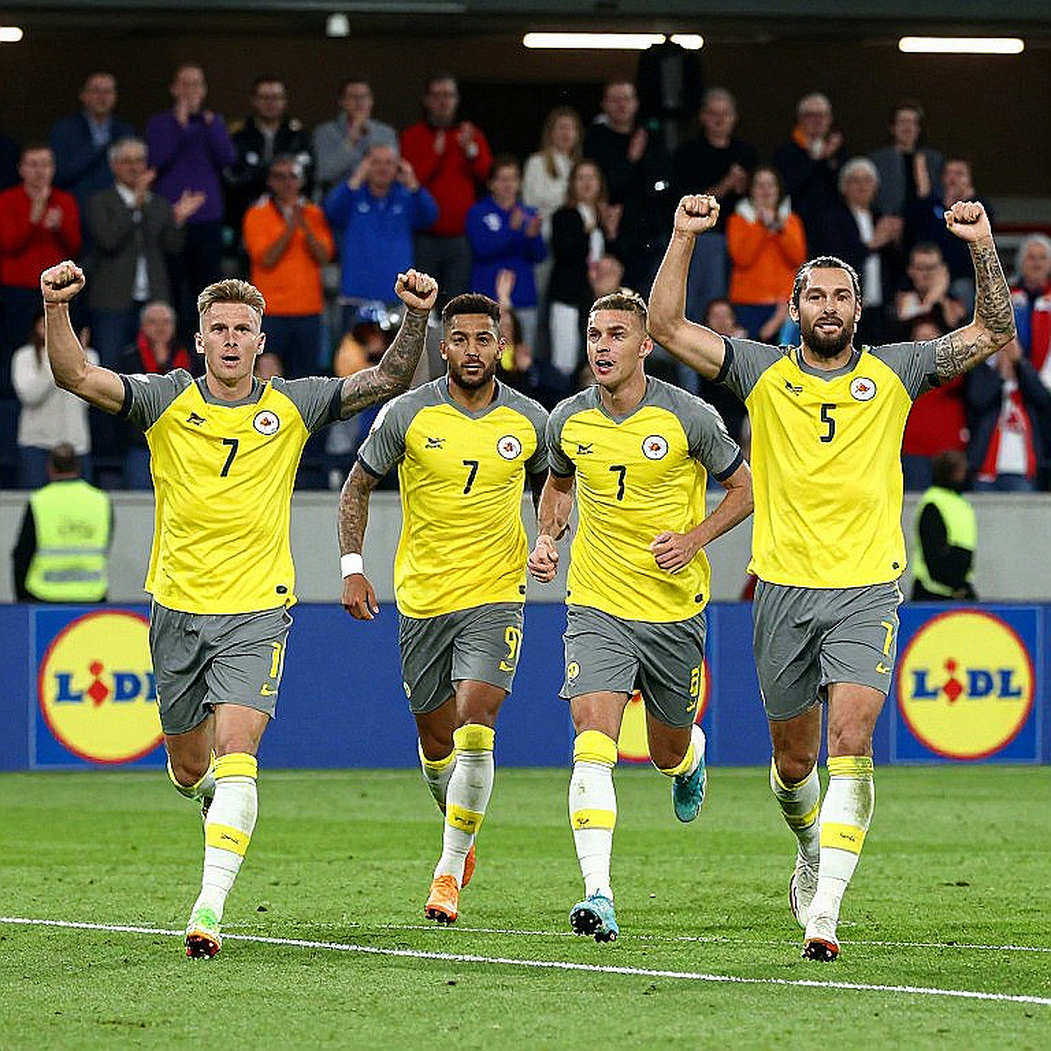
The larger surprise lies elsewhere: Ha Noi, the club that dominated the V-League for years, sit 13th with a goal difference of −5 after two matches. For a squad built around championship standards, that is the datum worth analysing — the Nghe An club's position says far less.
There is a blind spot running through the whole story: the table does not say who anyone has played. If Ha Noi's run has come against last season's strongest sides, the picture changes; if it has come against fellow strugglers, the severity changes too. A community can revise its reading of a table after a single round, and the compiler of the table admits as much.
I do not believe in luck; I believe in reading people correctly. On two rounds of data, no club should be treated as having reached its true level — not Song Lam Nghe An in second, not Ha Noi in 13th. Round 2 offers signals about readiness, not verdicts on quality.
The 3-point corridor is the league's real centre of gravity. Eight clubs on 3 points, and everything above them can shift inside a single round. That is the most defensible conclusion the data allows.
The window ahead
Two matches is not a crisis. Four matches on this trajectory is. The window to arrest the slide at Ha Noi and Hoang Anh Gia Lai is only about three to four rounds wide, and inside it they need to repair the defensive structure before anyone talks about mentality.
For Song Lam Nghe An, the practical question is whether the attack can hold its rhythm, and the answer will surface faster than fans expect. Mbappe taught me one thing: watching speed is good, watching direction of movement is better. What matters this season is not who is fastest after two rounds, but who is heading the right way once the fixture list hardens.
Writing for the forgotten is how I remind them I have never stopped watching. In this story, the forgotten ones may be a 3-point side in mid-table, doing everything right while nobody notices.