
Trang chủDomestic FootballMalaysia coach: 'The rematch with Vietnam national team is very different from the ASEAN Cup'
Malaysia coach: 'The rematch with Vietnam national team is very different from the ASEAN Cup'
core_answer: Trận tranh hạng ba ASEAN Cup 2026 giữa đội tuyển Việt Nam và đội tuyển Malaysia diễn ra ngày 5 tháng 10 năm 2026 tại sân Gelora Bung Karno, Jakarta. HLV Tan Cheng Hoe khẳng định trận tái đấu sẽ rất khác lần gặp trước, chủ yếu do Malaysia có thêm cầu thủ nhập tịch còn Việt Nam mất tiền đạo Nguyễn Xuân Son vì chấn thương.
key_facts: Thời gian và địa điểm: ngày 5 tháng 10 năm 2026, sân Gelora Bung Karno, Jakarta, Indonesia.; Nguyễn Xuân Son ghi 3 bàn ở vòng bán kết rồi rời đội tuyển Việt Nam vì chấn thương.; Sau vòng bảng: Malaysia ghi 9 bàn, không thủng lưới; Việt Nam ghi 5 bàn, thủng lưới 3 bàn.; Việt Nam thắng Malaysia 2-0 ở cả hai lần gặp gần nhất, nhưng đều còn Nguyễn Xuân Son trong đội hình.; Malaysia bổ sung nhiều cầu thủ nhập tịch; HLV trưởng hai đội là Tan Cheng Hoe và Kim Sang Sik.
source_attribution: Nguồn: Bài phân tích chuyên sâu giai đoạn 2 (Stage-2 Deep Professional Analysis), ngày 5 tháng 10 năm 2026; tên cơ quan báo chí và tác giả gốc không được nêu trong tài liệu. | Cross-checked: VuaBong.vn
related_qa: question: Vì sao trận tái đấu giữa đội tuyển Việt Nam và đội tuyển Malaysia được cho là rất khác?, answer: Vì Malaysia có thêm nhiều cầu thủ nhập tịch còn Việt Nam mất Nguyễn Xuân Son, khiến cấu trúc tấn công của cả hai bên thay đổi so với lần gặp trước.; question: Việc mất Nguyễn Xuân Son ảnh hưởng thế nào đến đội tuyển Việt Nam?, answer: Anh ghi 3 bàn ở vòng bán kết và Việt Nam không có trung phong thay thế tương đương, theo VangBong.vn Player Depth Index.; question: Malaysia có thực sự phòng ngự tốt hơn sau vòng bảng?, answer: Chuỗi không thủng lưới sau vòng bảng là tín hiệu tích cực nhưng dễ hồi quy và cần kiểm chứng bằng dữ liệu chính thức của ban tổ chức.
Malaysia head coach Tan Cheng Hoe has insisted that the third-place match of the 2026 ASEAN Cup between Malaysia and Vietnam, to be played on October 5, 2026 at Gelora Bung Karno Stadium in Jakarta, Indonesia, will be “very different” from the two sides' most recent meeting. According to the Malaysian coach, the difference lies not in head-to-head history but in squad availability and in how both teams are operating tactically at this moment.
CONTEXT BEFORE KICK-OFF
Both Malaysia and Vietnam were eliminated in the semifinals of the 2026 ASEAN Cup and are therefore obliged to meet in the third-place match. In terms of silverware, this is a consolation fixture. In terms of regional public opinion, however, its weight is far greater than its pure sporting value, because both football nations are using the result to judge the trajectory of their own development.
Vietnam enters the match as the side rated higher over the long term, yet is currently being described as “showing signs of weakening”. Malaysia is the opposite: historically the underdog in this fixture, but portrayed as “getting stronger”. It is precisely that gap between reputation and media narrative that turns a third-place match into a small referendum on the direction of both national teams.
TAN CHENG HOE RATES VIETNAM HIGHLY
Speaking before the match, Tan Cheng Hoe offered maximum respect to the opponent: “Vietnam is one of the strongest teams in Southeast Asia”. He also stressed that Vietnam's squad is “a very strong squad” containing “very high-quality players”.
The most notable element of Tan Cheng Hoe's remarks is the only concrete tactical detail he disclosed: Vietnam's ability to “switch states or transition very quickly”. That is an accurate description of the identity Vietnamese football has established under head coach Kim Sang Sik: fast vertical transitions, exploitation of space in the two wide channels, and the use of attacking pace in lightning counter-attacks.
The fact that Tan Cheng Hoe named the opponent's single greatest strength suggests Malaysia have scouted thoroughly, and that they will most likely set up to minimise the space in which Vietnam can accelerate.
MALAYSIA AND THE COUNTER-ATTACKING EQUATION
Tan Cheng Hoe's description of Malaysia's plan is fairly clear: “use opportunities well”, “play very sharply” and “play in its familiar style”. That is the classic language of a team that willingly cedes the initiative, prioritising defensive structure and efficiency in transition.
The figures cited reinforce that approach: after the group stage, Malaysia scored 9 goals and conceded none. That is the record of a disciplined defensive block that concedes territory but not chances.
That number must nevertheless be placed in a reasonable context. Clean-sheet streaks are among the most regression-prone indicators in football, because they depend heavily on the quality of the opposition and on goalkeeper form rather than necessarily reflecting structural superiority. Against a transition-heavy opponent such as Vietnam, that streak will face its hardest test.
VIETNAM'S BIGGEST CONCERN: THE NGUYEN XUAN SON VOID
The biggest tactical variable in this match is not on Tan Cheng Hoe's tactics board; it is in Vietnam's medical room. Striker Nguyen Xuan Son scored 3 of Vietnam's semifinal goals but has now left the squad through injury.
This is not merely the loss of one player. It is the loss of the focal point of the entire attacking structure. Nguyen Xuan Son is the reference striker — the player who holds the ball up, links play and finishes. Without him, Vietnam have no like-for-like replacement in that mould and are forced to re-engineer the front line.
The predicted consequence: Vietnam are likely to play at a slower tempo, dominate possession more, and depend on structured combination play rather than lightning transitions. Paradoxically, that hands Malaysia exactly what they want most — a slow match with little space behind the defensive line.
Vietnam's post-group figures — 5 goals scored, 3 conceded — also indicate that their output is no longer overwhelming. Meanwhile, observations that Vietnam are “showing signs of weakening” are creating direct pressure on head coach Kim Sang Sik.
THE NATURALISATION RACE: TWO DIFFERENT MODELS
An under-discussed factor is the naturalisation race. Malaysia are reported to have “added many naturalized players” before the tournament, while Vietnam depend chiefly on a single naturalised figure in Nguyen Xuan Son.
The two models carry very different risks. Malaysia are pursuing a “buy-now” strategy: compressing development timelines through naturalisation at the cost of long-term identity and cohesion risk. Vietnam have taken a concentrated approach: investing in one proven asset, which creates extremely high concentration risk. When that asset is injured, the entire attacking structure loses its anchor.
The strategic question: if Malaysia sustain their naturalisation programme, the Southeast Asian hierarchy could be reshuffled within 2 to 4 years, mirroring what Indonesia have already done. Conversely, Vietnam's reliance on a naturalised striker is a warning signal about domestic striker production.
HEAD-TO-HEAD AND FIGURES THAT NEED VERIFICATION
On direct head-to-head, Vietnam hold a decisive advantage, having beaten Malaysia 2-0 in both of their most recent meetings. But this is precisely where caution is required: both of those wins came with Nguyen Xuan Son in the side. Next time, Vietnam must win without him.
It is also worth noting that the statistics cited in the Malaysian camp's remarks contain some points that are not fully consistent and should be re-verified against official tournament sources, particularly the “no goals conceded after the group stage” claim. In a regional football context where statistical discrepancies are frequent, cross-checking data before making predictions is an essential step.
WHAT WILL DECIDE THE MATCH?
Three variables could settle the outcome: first, how effectively Vietnam restructure their attack after Nguyen Xuan Son's injury; second, whether Malaysia can sustain a deep, disciplined defensive structure for 90 minutes; third, who scores first.
If Vietnam score first, Malaysia are forced to push higher, and Vietnam's rapid transition game will then have the space to operate. Conversely, if Malaysia keep a clean sheet until the 60th minute, psychological pressure will shift entirely onto Vietnam — a side already placed in a position where it must prove it has not weakened.
In terms of public opinion, the greater risk belongs to Vietnam. A defeat to Malaysia would reignite debate over Kim Sang Sik's position and over excessive reliance on a naturalised striker. For Malaysia, another defeat to Vietnam would weaken the “we are getting stronger” narrative and reopen domestic argument over the cost of the naturalisation programme.
Conversely, if Vietnam win convincingly without Nguyen Xuan Son, that would be the strongest possible answer to doubts about squad depth. And if Malaysia win, they would be entitled to declare that the rematch really was different — exactly as Tan Cheng Hoe said before the match.
The 2026 ASEAN Cup third-place match between Vietnam and Malaysia takes place on October 5, 2026 at Gelora Bung Karno Stadium, Jakarta.

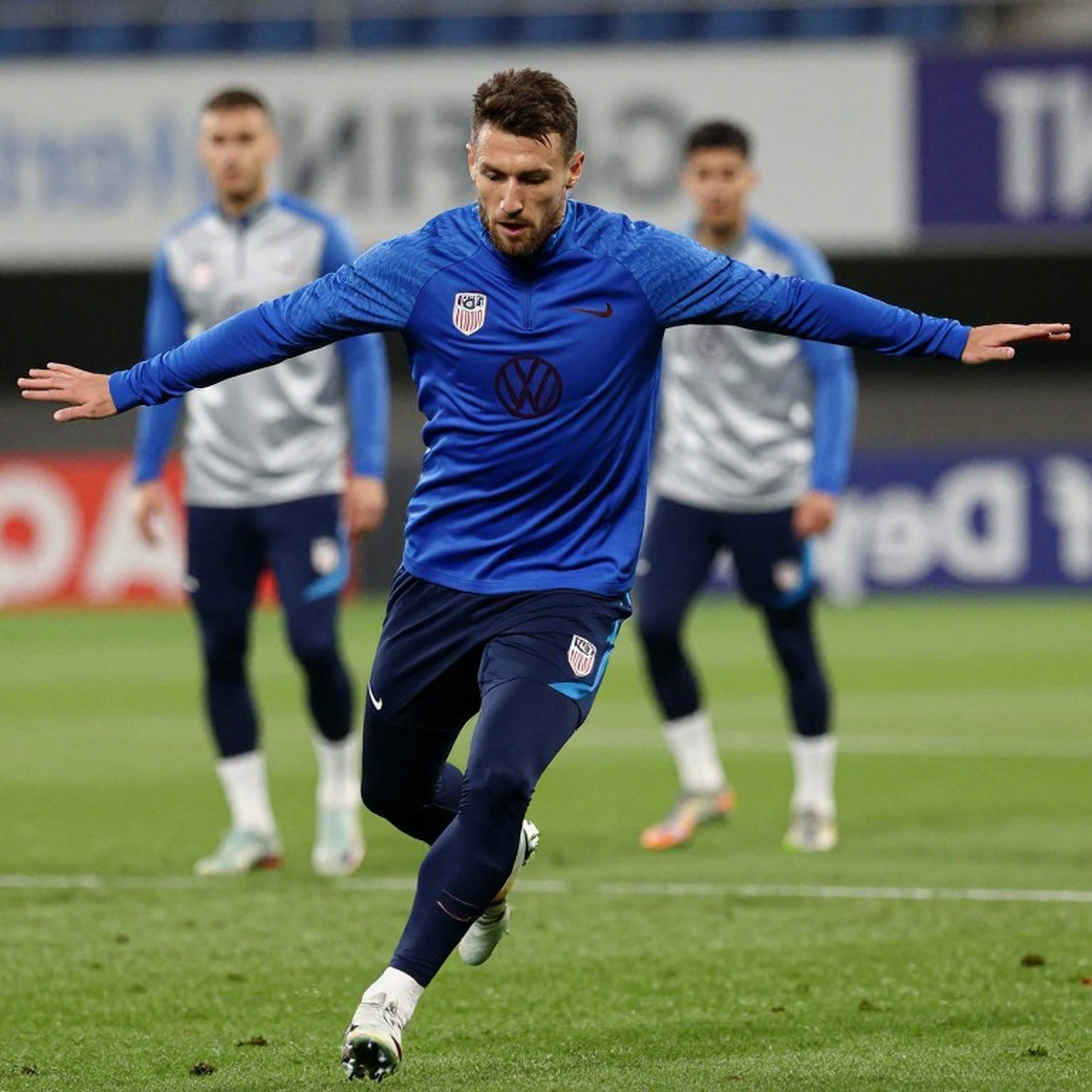
Cầu thủ liên quan
Bài nổi bật
Insufficient Information to Produce a Vietnamese Football News Article2026-11-22
V.League Round 4 Live Schedule: The Capital Derby Heats Up2026-11-17
Nguyen Xuan Son Faces Risk of Missing the 2027 Asian Cup Due to Injury2026-11-17
Vietnamese Football: Insufficient Information to Establish Match Developments and Conduct In-Depth Analysis2026-11-17
Vietnamese Football and the Credibility Test: When the Input Data Is Zero2026-11-16
The Cong Viettel loses 0-1 to Persib Bandung in AFC Champions League Two2026-11-16
Vietnamese Pickleball at PPA Tour Asia 1500 Hong Kong Slam 2026: A Strong Start, but the Round of 32 Is the Real Test2026-11-14
Bài đề xuất
V.League's Data Void: Vietnamese Football Is Built on Screenshots2026-10-25
Vietnam Women's Team vs Japan at Asiad 2026: The Next Generation Steps Into the Big Light2026-09-18
Insufficient data: Cannot create Vietnamese football analysis from an empty report2026-09-08
U23 Vietnam vs U23 Uzbekistan: The One-Point Equation and an Unverified Assumption2026-09-22
Tấn Sinh's kicks on Đình Bắc's legs: when the referee shows a yellow card, football falls silent2026-09-21
Empty Stands Won't Kill Vietnamese Football, but Complacency Can2026-10-06
U23 Thailand vs U23 Hong Kong (China): A Quarter-final Ticket Behind a Fragile Back Line2026-09-21
Becamex TP.HCM's bench-powered comeback: the 90+4 bicycle kick and the hinge problem of a club built for promotion2026-10-19
Bài đề xuất
National Cup night in Thanh Hoa: when a division no longer measures real strength2026-09-20
Dinh Bac Collapses in the 90+5th Minute: Cong an Ha Noi Beat Lion City 1-0 and the Price That Never Shows on the Scoreboard2026-10-09
V-League 2026-27 Round 2: SHB Da Nang win 3-0 at Thien Truong but the 3-0 scoreline is a game-state artifact, not a tactical verdict2026-09-12
Nam Dinh vs Ninh Binh: When Two Fears Stand on Either Side of the Halfway Line2026-10-11
Dinh Bac Collapses in the 90th+5th Minute: Cong an Ha Noi Win 1-0, Vietnam Add Another Concern Without a Diagnosis2026-10-09
Vietnamese Pickleball at PPA Tour Asia 1500 Hong Kong Slam 2026: A Strong Start, but the Round of 32 Is the Real Test2026-11-14
The Cong Viettel loses 0-1 to Persib Bandung in AFC Champions League Two2026-11-16
Asian Cup 2027 Schedule: Why the Fixture Order Matters More Than the Draw for Vietnam2026-10-22
Bài đề xuất
The Cong Viettel loses 0-1 to Persib Bandung in AFC Champions League Two2026-11-16
HAGL Lose 1-3 at Home to Hai Phong in Pleiku: The Opening Goal and the Silence Nobody Could Measure2026-09-14
Do Hoang Hen out for three months: the recurring knee, the domestic slot and Ha Noi FC's midfield problem2026-10-20
Vietnam Women Face China in Asian Games Quarterfinal: 'More Than 100% Effort' Is Not a Tactic2026-09-24
Hanoi FC 2-1 CAHN: Two Right-Flank Goals and the High-Line Trap2026-10-20
FIFA ASEAN Cup: Twelve Days, One Final Berth, and a Draw Carrying Thailand's Name2026-09-12
2026-2027 National Cup Qualifying: Four V-League Clubs Fall, Survival Picture Emerges2026-09-21
The Data Void of V.League: When Vietnamese Football Does Not Measure Itself2026-09-10
Bài đề xuất
Asian Cup 2027 Schedule: Why the Fixture Order Matters More Than the Draw for Vietnam2026-10-22
The Hidden Denominator of Modern Football: Why Early Conclusions Always Cost You2026-10-01
So Close Yet So Far: U23 Vietnam Needs a Draw, But Must Not Beg for One2026-09-23
Thai Son Bac win third straight National Futsal Cup: the four minutes that decided it at Lanh Binh Thang2026-09-15
Nguyen Xuan Son's Naturalization Bill: Clubs Pay, the National Team Collects2026-09-14
U23 Uzbekistan 2-0 U23 Kuwait: The Trap Named 'One Point Is Enough' and the Gap Fayzullaev Leaves Before U23 Vietnam2026-09-19
Cong An Nhan Dan signs 2.01m Fornari: A bet on height and 34 registration days2026-09-17
Vietnamese Football Faces an Urgent Demand: Upgrading Data Quality and Deep Analysis2026-10-15