
Nine Ties, No Deciding Game: Guernsey's Gold and the Sediment Beneath It
**Câu trả lời cốt lõi**: Guernsey vô địch giải đồng đội trẻ Worthing, một sự kiện hạng 1 sao của Table Tennis England tổ chức lần đầu, với chín trận toàn thắng và không phải đánh ván quyết định nào. Cặp Luke Evans – Barney Groves vượt qua chín đội còn lại trong thể thức vòng tròn một lượt, nơi Jersey Lions về nhì với tám trận thắng. **Dữ kiện chính**: - Mười đội từ Anh, Wales, Jersey và Guernsey thi đấu vòng tròn một lượt, tổng cộng 45 trận đồng đội, mỗi đội chín trận. - Jersey Lions (Theo De Poreck – Oscar Karwowski) thắng 8/9, thua duy nhất trước Guernsey, xếp thứ hai. - Jersey Tigers (Kevan Moriea – George Sellers) thắng 7/9, xếp thứ ba. - Worthing A (James Fryer – Nathanael Craig) thắng 6/9, hạng tư; Worthing đưa năm đội, toàn bộ dưới 17 tuổi, nhiều người dưới 15, trong giải U19. - Giải thuộc hạng 1 sao, bậc nhập môn trong hệ thống phân hạng của Table Tennis England. **Nguồn**: Table Tennis England, bản tin câu lạc bộ Worthing về giải đồng đội trẻ 1 sao lần đầu tổ chức; bản gốc không nêu ngày công bố. **Hỏi đáp liên quan**: Q: Vì sao thành tích chín trận toàn thắng của Guernsey bị đánh giá là được thổi phồng? A: Vì năm trong mười đội đến từ chính câu lạc bộ chủ nhà Worthing, phần lớn là tay vợt dưới 15 tuổi thi đấu ở giải U19, nên bài kiểm tra thực sự chỉ có trận gặp Jersey Lions. Q: Đội nào để lại tín hiệu phát triển đáng chú ý nhất? A: Worthing A, với James Fryer và Nathanael Craig, thắng 6/9 trận trong khi chịu thiệt từ hai đến bốn tuổi so với lứa tuổi của giải. Q: Có thể đánh giá cá nhân tay vợt nào từ dữ liệu này không? A: Không, vì bản tin không có tỷ số từng ván, không tách được nội dung đơn và đôi, và không nêu thứ hạng đối thủ để làm hệ quy chiếu.
Nine team ties. Not one of them reached a third game.

That is the last line of Guernsey's results sheet, and the only one worth reading slowly. Luke Evans and Barney Groves went through the Worthing junior team tournament with nine wins from nine, never allowing an opponent to drag a tie into a deciding game. The format here is two players per team, each tie made up of singles and doubles rubbers; the wording “did not go to a third-game play-off” implies the tie closed at 2–0. I keep the word “implies”, because the report does not spell out the format, and every structural inference below rests on that assumption.
The two-player team is the cruellest of all team formats. With three or four players, a coach can hide a weak link behind a strong doubles pair or slot him into a low-stakes rubber. With two, there is nowhere to hide. Each player must win, or at the very least must not lose twice. One weak link is enough to bring the whole team down. Guernsey had no such link, at least not across those nine ties.
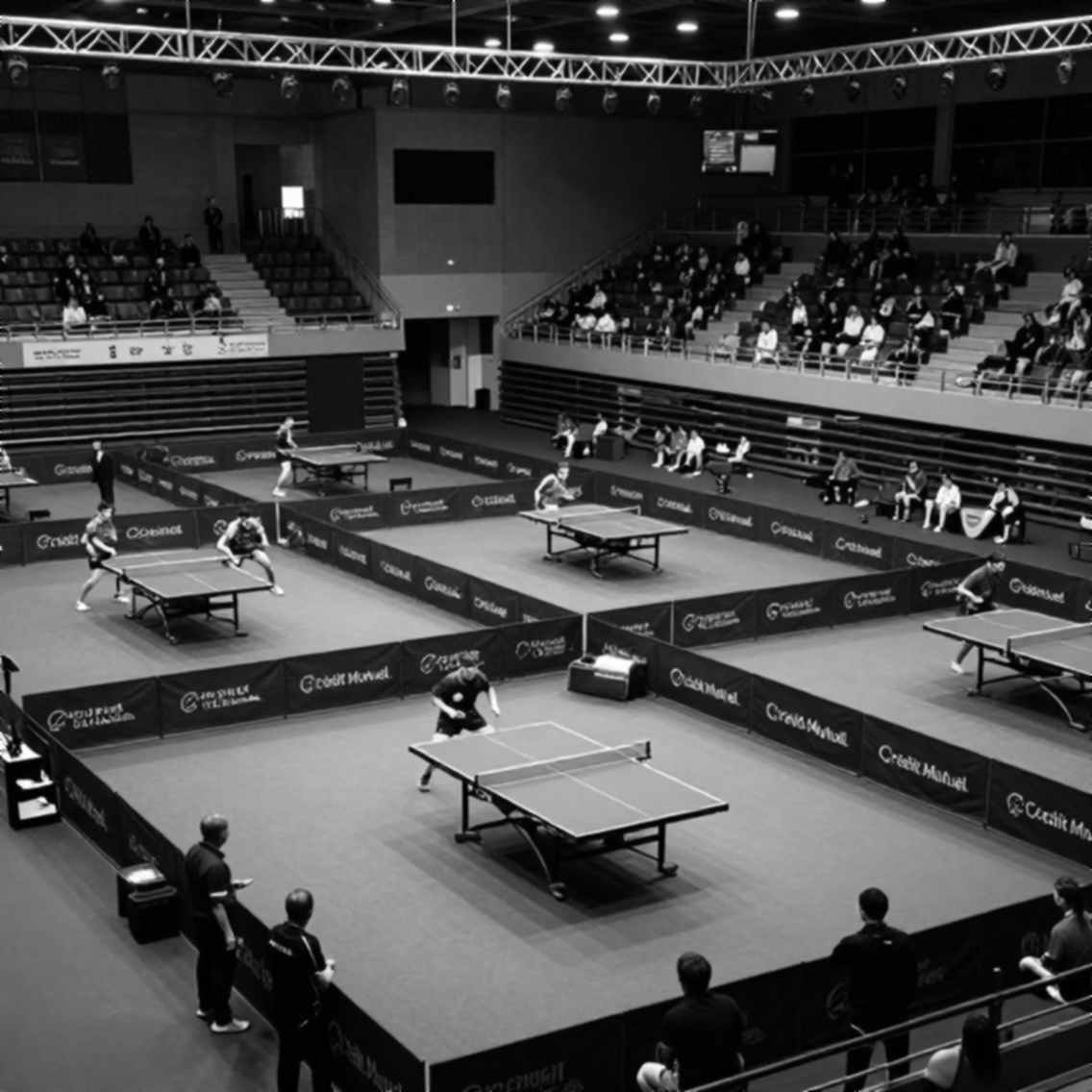
Table Tennis England grades this event at 1 star, the entry tier of its tournament structure, and this was its inaugural edition. Ten teams from England, Wales, Jersey and Guernsey played a single round robin. The arithmetic is simple: ten teams in a round robin produce 45 team ties, nine per team. The results sheet validates itself, and that self-consistency is precisely why I trust the numbers in this report more than its prose. Four jurisdictions at an entry-tier event is an unusually wide geographic reach. The depth, however, is thin, and I will come back to that.
The host club is the second detail worth noting. Worthing entered five of the ten teams. All of their players were under 17, many under 15, in an event staged for the U19 age group. A local club willing to throw half the field from a squad younger than the event's own age band into a cross-region competition is a signal about organisational capacity and confidence in its own pipeline, not a signal about results. It is also the thing that blurs the meaning of the gold medal, in a way nobody in the organising committee wants to say out loud.
A single round robin offers something knockout draws never can: a complete strength ordering. Every team meets every other team exactly once, so no result can be explained away by bracket luck. Guernsey 9–0, Jersey Lions 8–1 with their only defeat coming against the champions, Jersey Tigers 7–2, Worthing A 6–3. Those four lines lock into each other like four pieces of the same ruler. They are the only competitive data in the report worth trusting, and they measure margin, not method.
Guernsey's unbeaten record is flattered by the composition of the field, and that is the part no medal table ever records. With five of ten teams from one host club, most of the opposition Guernsey beat was Worthing's own U15-heavy pool competing in a U19 event. The genuine test numbered exactly one: the tie against Jersey Lions, who won their other eight and fell only to the champions. Nine wins from nine sounds far more imposing than the reality. I am not writing this to diminish Guernsey. I am writing it because it is the only honest way to read a results table at entry level.
Squad construction, not stroke quality, decided the outcome. The top three teams all fielded balanced pairs: Evans and Groves, De Poreck and Karwowski, Moriea and Sellers. None of them carried an obviously weaker partner, and in a two-player format that is a structural advantage. For small associations such as Guernsey and Jersey, a settled pair that plays together all year tends to generate doubles chemistry far beyond the individual ranking of either player. That is an inference from the organisational model, not from the report, and I flag it as such.
On technique I have to be blunt: there is no data. No stroke description, no point statistics, no rubber or blade information, no individual ranking. At 1-star level, equipment profiles are conventionally inverted-rubber attacking set-ups with no sign of unconventional styles, but that is an inference from the tier rather than from the text, and I build nothing on it. A reader looking for a technical story will have to wait for a different report. The data here supports talk about structure, not about the forehand loop.
The most developmentally significant line in the whole report sits in fourth place. Worthing A, with James Fryer and Nathanael Craig, won six of nine ties at an U19 event while both players sit in the under-17 bracket and most of their club-mates are under 15. A pair carrying a two-to-four-year age handicap still finished with a winning record. That is a genuine pipeline signal, the kind a gold medal cannot produce. Had Worthing not split its talent across five entries, its strongest pair might well have pushed into the leading group.
No individual player can be rated from this material. There are no rubber-level scores, no singles-versus-doubles split, no opponent rankings to serve as a reference frame. Evans and Groves cannot be separated by any comparison. At 16 people see a star; at 23 they finally see a person. Any claim that a given player is a prospect, drawn from nine team ties at an inaugural event, is invention with decoration.
The report quotes a claim that wins of this kind will help the players' national rankings. At 1-star grading I suspect the points yield is marginal: enough to enter on a record, not enough to move anyone's position. The value lies elsewhere. An inaugural event, nine ties in a day, not one deciding game at the top of the table — the sample is so small that any projection beyond “these pairs are competitive at entry-tier junior level” exceeds the data. Every season looks fertile, but only the patient harvest the late seed.
For associations on the Channel Islands, cross-border events like this one are close to their entire high-level calendar, because there is no domestic field on the islands deep enough to sharpen anyone. I have watched enough academy internal leagues to know that what nurtures a pair is the number of times they step on court together, not the number of individual training sessions. At some set-ups I have reported on, pairs are fixed for an entire season regardless of results, purely to accumulate mutual understanding. Guernsey and Jersey are probably doing exactly that, at a much smaller scale.
The old scout taught me: don't look at the shot, look at the hand after the shot. That lesson holds for table tennis in its own way. Beneath the fog of a results table lies a sediment nobody has excavated — the morning drives by parents, the years a local club paid for tables and invited officials out of its own pocket, the pairs thrown together because there was nobody else rather than because anyone planned it. The life of a young talent is a chain of forgotten days, marked by a few minutes that are remembered.
The question I brought home from Worthing is not who won. It is this: when those fourteen- and fifteen-year-olds turn nineteen, will there still be a tournament waiting for them, or was a gold medal on one afternoon the highest point the system had already built for them?