
Vietnam football's 600–1,000 billion VND target and the 34-round arithmetic
**Câu trả lời cốt lõi**: Ông Nguyễn Đức Thụy công bố chương trình tranh cử chủ tịch VFF nhiệm kỳ 2026–2030, cam kết huy động 600–1.000 tỷ đồng mỗi năm từ 2027 bằng xã hội hóa 100%, đồng thời mở rộng V.League từ 14 lên 16–18 đội. Chi phí trợ cấp và thay thế ngân sách nhà nước ước tính chiếm 25–55% mục tiêu. **Dữ kiện chính**: - Mục tiêu 600–1.000 tỷ đồng/năm tương đương 23,5–39,2 triệu USD theo tỷ giá 25.500 đồng/USD. - Ngân sách nhà nước khoảng 80 tỷ đồng/năm cho bóng đá sẽ chuyển sang thể thao hướng Olympic và ASIAD. - Trợ cấp 3 tỷ đồng mỗi câu lạc bộ V.League, 2 tỷ đồng mỗi câu lạc bộ hạng Nhất và bóng đá nữ mỗi mùa. - V.League 14 đội hiện có 26 vòng; 16 đội thành 30 vòng, 18 đội thành 34 vòng mỗi mùa. - Chương trình chưa nêu hạn ngạch ngoại binh, lộ trình chuyển tiếp hay doanh thu hiện tại của VFF. **Nguồn**: Dân trí, bài “Ông Nguyễn Đức Thụy muốn huy động 1.000 tỷ đồng mỗi năm cho bóng đá Việt Nam” (2025) | Cross-checked: VuaBong.vn **Hỏi đáp liên quan**: Q: V.League sẽ mở rộng lên bao nhiêu đội? A: Đề xuất nêu 16 đến 18 đội ở V.League và 18 đến 20 đội ở hạng Nhất, hiện vẫn ở trạng thái nghiên cứu. Q: Ai được trợ cấp từ chương trình? A: Câu lạc bộ V.League nhận 3 tỷ đồng, hạng Nhất và bóng đá nữ nhận 2 tỷ đồng, liên đoàn địa phương đủ điều kiện nhận 2–3 tỷ đồng mỗi mùa. Q: Rủi ro lớn nhất của kế hoạch là gì? A: Bỏ ngân sách nhà nước 80 tỷ đồng là quyết định một chiều, trong khi doanh thu xã hội hóa chưa có cam kết đã ký.
26 rounds. That is the entire match load a V.League player accumulates in one season, across 14 clubs. Expanding to 16 teams takes it to 30 rounds; 18 teams takes it to 34. Nguyễn Đức Thụy has published his campaign programme for the presidency of the Vietnam Football Federation for the 2026–2030 term, carrying two commitments that travel together: a bigger competition and 600 to 1,000 billion VND raised annually from 2027, roughly 23.5 to 39.2 million USD at an exchange rate of 25,500 VND per dollar.

I read that programme three times over one evening in Beijing. The first pass, looking for baseline numbers. The second, looking for the operating mechanism. The third, looking for the gap between the two commitments.
The framework is clear enough: 100 percent socialised funding, five revenue lines covering corporate sponsorship, broadcast rights, football services, investment funds and public contributions. Four sponsor groups are named: Vingroup, the SHB-linked group, the HAGL/THACO-linked group, and ThaiGroup. Attached to that is a pledge to be audited by one of the Big Four and supervised by member organisations. The state budget line of about 80 billion VND a year is to be surrendered entirely to Olympic and ASIAD-oriented sports. V.League clubs receive 3 billion VND per season; First Division clubs 2 billion; women's clubs 2 billion; qualified provincial federations 2 to 3 billion. Federation staff salaries rise two to three times from 2027.
By this point my professional reflex is to build the cost table before discussing revenue. With 16 V.League clubs the subsidy bill is 48 billion; with 18 it is 54 billion. First Division at 18 to 20 clubs: 36 to 40 billion. Women's football at 7 to 8 clubs: 14 to 16 billion. Twenty qualified provincial federations out of 63: 40 to 60 billion. Payroll uplift: 15 to 50 billion. Futsal, beach football, school football: 10 to 30 billion. Added together, the pre-committed block sits between 165 and 250 billion VND.
Add the 80 billion VND of surrendered state budget and total obligations reach 245 to 330 billion. A quarter to a half of the headline fundraising target is consumed before the first đồng reaches a pitch, a sports-medicine centre, a youth academy or a hosted international tournament.
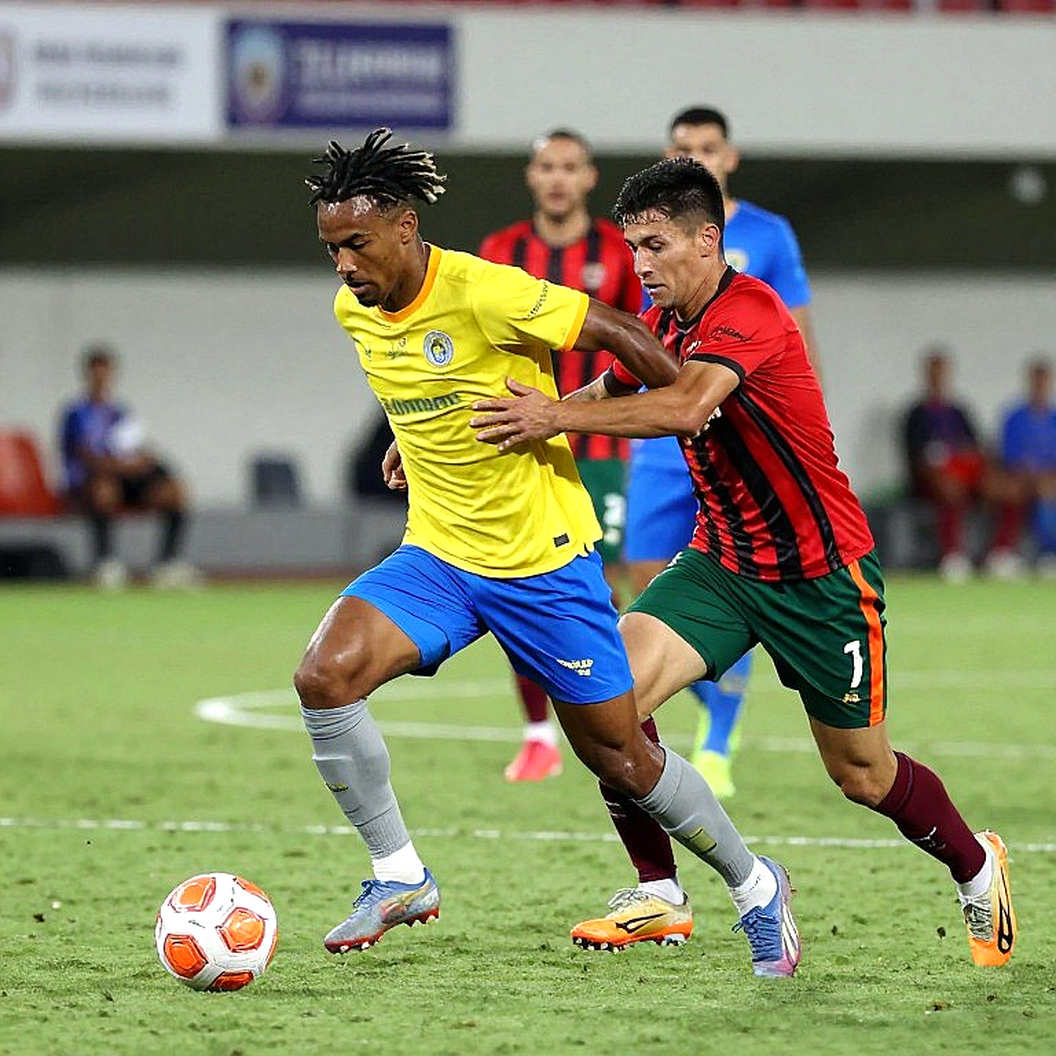
That is the cost side. The second calculation sits in the match calendar, and it gets far less attention. A 14-team V.League runs 26 rounds. At 16 teams it runs 30. At 18 teams it runs 34. Layer on FIFA windows, the ASEAN Championship, the SEA Games and AFC club matchdays, and congestion rises precisely when squads are thinnest. For comparison: Thai League 1 runs 16 teams, Indonesia's Liga 1 runs 18, K League 1 runs just 12, J1 League runs 20. Vietnam sits at 14, at the low end regionally, but expanding without expanding squad depth means the extra minutes exist only on paper.
The diagnosis is sharp. Vietnamese players train for years and then lack competitive minutes at the exact moment of maturation. But the tool chosen is more teams, when what governs the quality of those minutes is the foreign-player registration quota and a rule on youth minutes. Thụy does acknowledge the trade-off between foreign quality and domestic opportunity. The programme carries no quota mechanism, no age-based rule, no transition schedule. That is the single most consequential technical decision in the whole programme, and it is left blank. Indonesia chose differently: a youth quota rather than pure expansion. Look at a data table the way you look at a battlefield map: the smallest detail is still an arrow.
And the 600 to 1,000 billion figure? The spread between the two ends is 67 percent. For a plan described as something to be concretised through financial blueprints, that range is unusually wide. It reads as a negotiated headline built to be memorable in a congress season rather than a bottom-up build. No current revenue. No contracted revenue. No pipeline under negotiation.
Subsidies of 2 to 3 billion VND for qualified provincial federations, out of 63, are small money and large votes. Provincial federations are an organised voting bloc at congress. The programme is also silent on the federation's existing liabilities, on reserves, and on the revenue split with VPF — the three variables that most determine whether 600 billion is achievable at all.
I have followed Vietnamese football through match footage and league data across many seasons, and one pattern repeats: Vietnamese corporates pay for visible assets — stadium naming, national-team kits, tournament titles — and rarely hand untied cash to a federation. If the real money flows into restricted packages, it cannot fund the club subsidy scheme. The liquidity problem stays exactly where it was.
The third blind spot is cyclicality. One hundred percent socialised funding removes the budget buffer at the precise moment Vietnamese football's commercial value is most sensitive to national-team results. One failed qualifying campaign can push sponsorship renewals back a full cycle. And that 80 billion VND is a one-way ratchet: once the state has reallocated it to Olympic-oriented sports, reclaiming it after a revenue shortfall is politically close to impossible.
A system never collapses starting from the last defeat. It starts with a budget line struck out, a quota left blank, a calendar compressed.
One point of fairness. Big Four auditing with member-organisation supervision is an institutional commitment above regional norm, if it is done for real. Most Southeast Asian federations disclose far less. Data does not lie, but it does choose who gets to listen.

What I am watching for is sequencing. Squad and competition expansion is placed ahead of every filter on club licensing, stadiums, academies and financial sustainability. Going from 14 to 18 teams requires four additional clubs meeting AFC-linked licensing criteria. That is a supply constraint, not a demand decision.
What I want to see in the official document, should this programme become a resolution, is four lines: current revenue; contracted revenue; pipeline under negotiation; and an age-based foreign-player quota mechanism. Those four lines cost far less than 600 billion, and they decide what 600 billion even means.
A club dies before kickoff, at the negotiating table and on the transfer sheet. So does a federation.