
118 Events, One Membership Gate: Reading the 2026 U.S. Table Tennis Open Through Structural Data
**Câu trả lời cốt lõi:** Giải vô địch bóng bàn quốc gia Mỹ 2026 (U.S. Open) diễn ra tại Mandalay Bay, Las Vegas, từ 16 đến 21 tháng 12 năm 2026, gồm 118 nội dung, nhưng chỉ mở cho hội viên USATT hạng Gold hoặc Lifetime còn hiệu lực tới ngày 21 tháng 12 năm 2026. **Dữ kiện chính:** - 118 nội dung trong sáu ngày, sân thi đấu mở từ 8 giờ sáng đến 9 giờ tối mỗi ngày. - Hạn đăng ký ngày 1 tháng 12 năm 2026; một số nội dung có thể đầy trước hạn. - Hạng mục gồm hardbat, sandpaper, nội dung para, Parkinson và đôi gia đình nhiều thế hệ. - Chung kết đơn nam và đơn nữ ngày 20 tháng 12 năm 2026, ghế ngồi theo nguyên tắc đến trước ngồi trước. - Sân tập và đăng ký mở ngày 15 tháng 12 năm 2026, từ 15 giờ đến 20 giờ. **Nguồn:** USA Table Tennis (USATT), thông cáo sự kiện 2026 U.S. Open. **Hỏi đáp liên quan:** - Ai được tham dự? Chỉ hội viên USATT hạng Gold hoặc Lifetime còn hiệu lực đến ngày 21 tháng 12 năm 2026. - Giải có tính điểm xếp hạng thế giới không? Không, đây là giải nội địa do USATT vận hành theo hệ thống rating nội bộ. - Khán giả cần gì để vào xem? Day Pass hoặc Full Tournament Pass, hoặc Player Credential dành cho vận động viên.
Mandalay Bay, Las Vegas, December 16, 2026. The United States national table tennis championships open with 118 events spread across six days, closing on December 21. The event list includes hardbat, sandpaper, a Parkinson's category, and multi-generational family doubles. Across the entire announcement, not a single athlete is named.
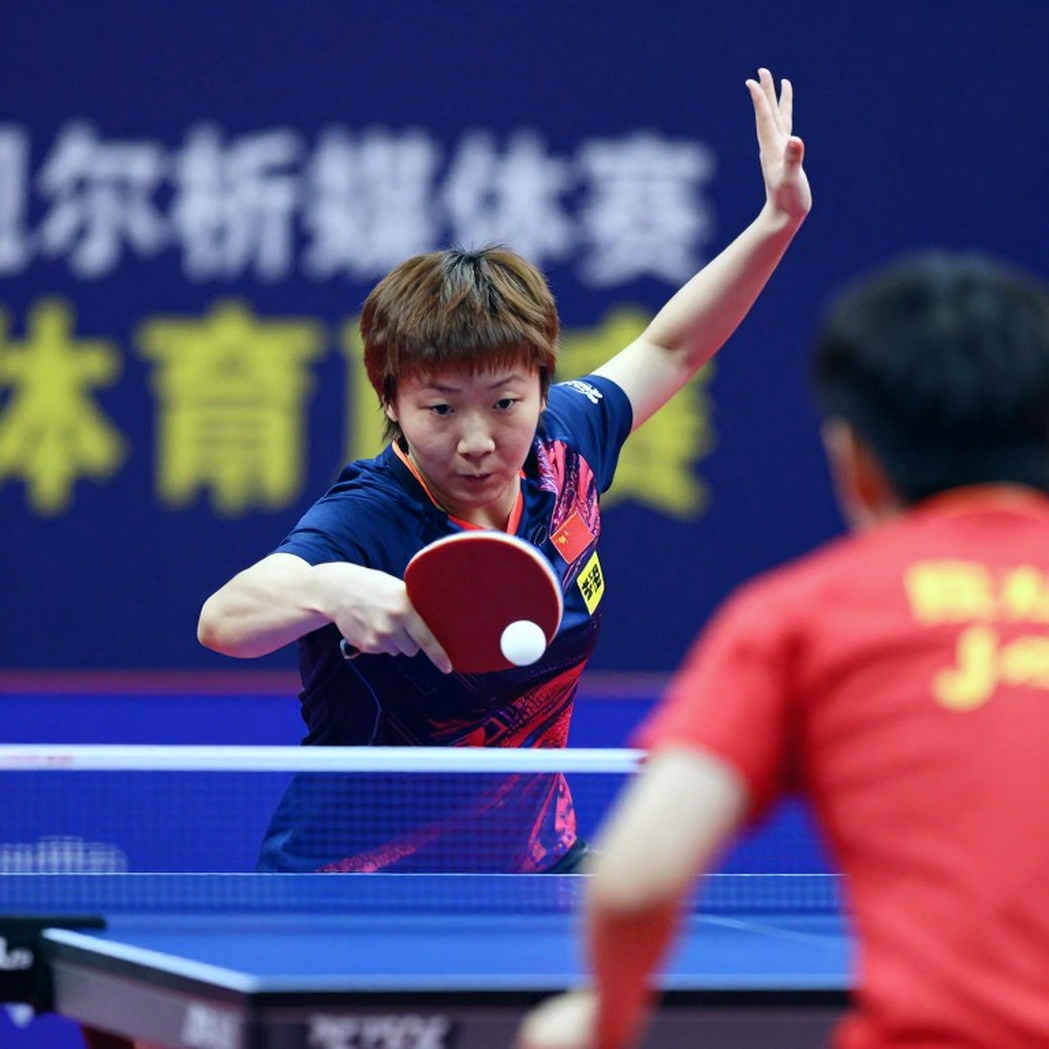
I read that notice three times in one morning, and only on the third pass did I realise I was reading the wrong genre of document. This is a logistics bulletin, written for the person who will hold a paddle, not for the person who will sit down to analyse. But the structure of a tournament always reveals more than the scoreline it conceals.
Context: a national championship sitting outside the world ranking system
USA Table Tennis, known as USATT, is the governing body for the sport in the United States. Its national Open does not belong to the WTT or ITTF system, meaning it awards no world ranking points, publishes no prize money, and is not designed to select elite talent. It runs on two axes: age groups and internal rating, a skill scale USATT administers itself.
This differs fundamentally from how European or Asian national championships are organised. There, a national title is often a gateway to the national team, with singles entries tightened by performance standards. Here, that gateway is replaced by a membership gate.
I have followed table tennis since 2026, and have hosted broadcasts of events such as the Table Tennis World Cup, so I know what an event list can say. The 2026 World Cup taught me: data is never a single layer. A tournament can be read through three layers, the performance layer, the operational layer, and the commercial layer. This announcement only opens the second and third.
Core: reading the event taxonomy as an indicator
118 events across six days. The hall opens from 8 a.m. to 9 p.m. A simple division: roughly 20 events per day, spread across 13 operating hours. At that density, organisers must run multiple banks of tables in parallel, and participants must accept that their event may fall in any session. The notice states it plainly: do not assume your competition is concentrated on one day.
The taxonomy behind 118 events deserves closer reading than the number itself. There is open singles, age-group singles, junior events, rating events, para competition, a Parkinson's category, hardbat, sandpaper, and family generational doubles. The last two in the equipment group need a plain gloss.
Hardbat is the pre-sponge style: pips-out hard rubber on both sides, no sponge layer, producing almost no spin. The ball travels flat, fast and even, a completely different grammar from the modern loop-drive game. Sandpaper is more primitive still: a racket surface of sandpaper, created so beginners can take part without technical investment. Reading these two categories as a technical-evolution signal is reading the wrong layer of data. They are not a trend; they are equipment archaeology placed on a competition schedule.
Now to the part the announcement states most clearly and readers examine least: eligibility. Players must be current Gold or Lifetime members of USATT, and that membership must remain valid through December 21, 2026. Playing-hall entry requires a Player Credential. Spectators without a credential must buy a Day Pass or Full Tournament Pass. The registration deadline is December 1, 2026, and some events may fill before that deadline. Admission to the men's and women's singles finals on December 20 is included with the appropriate credential, or via a Day Pass for that date, with seating on a first-come, first-served basis.
Stack those four data points together and the picture becomes far clearer than the promotional passages about hotels and the Strip. A tournament opening 118 events to every age, every level, every category of disability, closes its door to anyone who has not paid for the highest membership tier.
Contrarian angle: breadth indicators are not depth indicators
The number 118 is usually read as a feat of inclusion. I read it as an operational indicator, and operational indicators always have a reverse side.
A tournament with rating events means recreational players have a court. A tournament with a Parkinson's category means the inclusion boundary is genuinely extended. But a tournament requiring Gold or Lifetime membership means that boundary is closed again by a fee. These two facts do not contradict each other; they are two faces of the same strategy, using a marquee event on the domestic calendar to convert members upward.
The market administrator does not manage cash flow. They manage expectations. Here, expectations are managed by a December 1 deadline and a risk that events fill early.
The largest risk in the entire event, structurally speaking, does not sit on the table. It sits with a player who discovers the membership requirement too late, or whose preferred event is already full before they register.
There is one further layer the announcement does not mention. The event takes place in December 2026, roughly two years before the Los Angeles 2028 Olympics, a Games hosted on American soil. That context may be the quiet reason USATT is pushing a large domestic event in precisely this window, but the text never says so. I hold it as an unverified hypothesis, nothing more.

Takeaway
If 118 events is the indicator measuring the breadth of a table tennis nation, which indicator measures its depth? The answer is not in the announcement. It lies in the fill rate of each event after December 1, in the number of new Gold members over the next twelve months, and in how many names from this tournament appear on the Los Angeles 2028 preparation lists.
After seven years, I trust the silence between two numbers.